
The Hidden Cost of Early Specialization: A National Sport Leader’s Personal Story
Despite a successful career as an elite synchronized skater, Mariane Parent has a confession: she’s afraid of balls. And her story reveals exactly why Sport for Life’s Long-Term Development framework matters.
Mariane Parent stands at the helm of Réseau accès participation (RAP), a Sport for Life partner organization bridging national sport initiatives with Quebec’s francophone ecosystem. She’s a respected voice in quality sport and physical literacy. She’s also someone who spent years as a competitive athlete.
But ask her to play recreational soccer, and she’ll decline. Not because she doesn’t want to be active, but because early specialization left her with significant gaps in her physical literacy—gaps that persist into her mid-40s.
“I have a fear of balls,” Parent said during a recent podcast interview. “At 45, I would love to join the moms’ soccer league on Sunday nights or play pickleball. I’m a team player, I love to move, I know the importance. But I feel so clumsy, and I’m starting from so far behind.”
Missing the First Stages
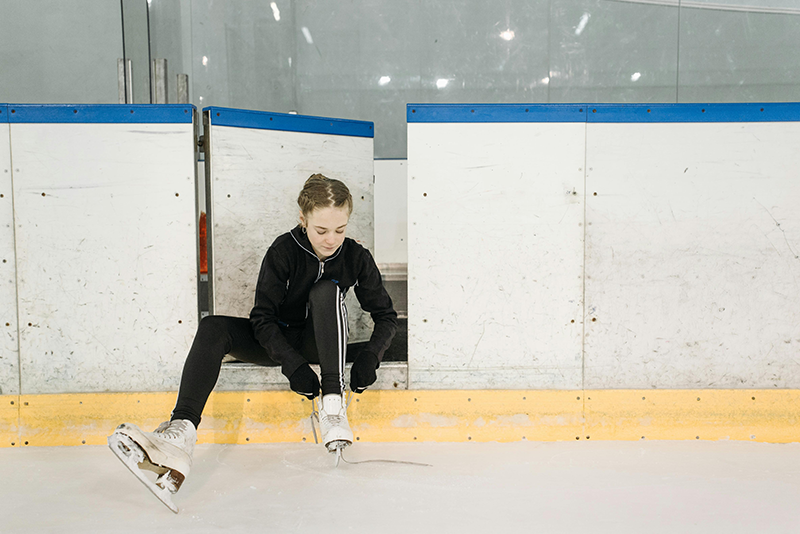
Parent’s athletic journey began at age four in figure skating. She progressed quickly through Quebec City’s system, excelling in individual competition. But when puberty hit and she lost her jumps—common as young bodies change—her individual skating coach delivered a blunt message: “It’s over, Mariane. Your individual career is done.”
Rather than leaving the sport entirely, Parent transitioned to synchronized skating with Les Coccinelles de Charlesbourg. In this discipline, she thrived as part of a 24-member team competing internationally and representing Quebec at national and world championships. The experience was demanding, rewarding, and all-consuming.
But looking back through the lens of Sport for Life’s Long-Term Development framework, Parent recognizes what was missing. During the critical first stages of development—when children build fundamental movement skills and learn a wide range of foundation sport skills—she was already locked into single-sport specialization.
To manage her intense training schedule, Parent’s school exempted her from physical education classes. The logic seemed sound: she was already highly active, and the time could be better spent studying.
“I didn’t do anything other than skating,” Parent recalled. “Not even my PE classes where I could have held a ball, where I could have learned other things.”
The Sport for Life Wake-Up Call
Years later, while teaching recreation and leisure at Cégep de Saint-Laurent, Parent attended her first Sport for Life conference. The content on early specialization, physical literacy, and the importance of sampling multiple sports hit with sudden clarity.
“I had a shock moment,” she said. “They explained what specialization was, the importance of physical literacy, of motor development, of diversifying experiences. I was sitting there thinking: I’m a product of specialization. Not only can I really skate, but I have very few transferable skills.”
This realization—that her elite athletic background had actually limited her long-term physical literacy—transformed how she approached her work in sport and recreation programming.
When Context Becomes Disabling
Parent’s story illustrates a principle Sport for Life emphasizes in its inclusive programming work: sometimes it’s not the person who is disabled—it’s the context that becomes disabling.
“The fact that I didn’t develop my motor skills in a diversified way means there are contexts that are disabling for me,” Parent explained. “There are contexts where I don’t feel welcome, I don’t feel competent, I don’t feel like things have been adapted for me.”
The irony is striking. Someone who competed at high levels, who teaches sport and recreation, who advocates for quality sport programming—struggles with fundamental movement skills most people develop during the first stages.
“I knew exactly where to place my foot, my head, my arms to the precise second in choreography,” she said. “But knowing where to position myself on a soccer field? Seriously, it’s not fun to play tennis with me. I laugh about it, but it’s not funny—it’s sad.”
The Physical Literacy Foundation That Sport for Life Champions
Parent’s experience demonstrates the direct link between physical literacy and long-term participation—a core principle of Sport for Life’s Long-Term Development framework.
As Sport for Life emphasizes, physical literacy isn’t just about motor development. It builds the confidence and motivation that fuel lifelong participation. When young people develop competence across a range of movements and sport contexts, they develop confidence to try new activities throughout their lives.
Without that foundation—even with elite-level training in one sport—adults can find themselves excluded from recreational opportunities.
“To get to a place where I’d be comfortable would take hours and hours,” Parent said. “I have three kids and a full-time job. To get the benefits of physical activity, I turn toward activities where I can already succeed.”
The Knowledge Has Changed
Parent was clear that no one in her athletic development made errors. “In that time, we thought specialization was the path. Nobody made a mistake. We believed it was the right thing to do.”
But Sport for Life’s research-informed framework now provides clear guidance. The evidence consistently shows that athletes who engage in multisport participation during the first stages and maintain diverse activities throughout their development develop stronger physical literacy, lower injury rates, and higher long-term retention in sport and physical activity.
“Today we know better,” Parent said. “And we’d like that knowledge to filter through the system.”
This is exactly what Sport for Life’s quality sport principles address—providing coaches, parents, and organizations with the tools and knowledge to implement developmentally appropriate programming at each Long-Term Development stage.
From Personal Experience to System Change
Parent’s role at RAP now involves adapting Sport for Life’s programs and resources for Quebec’s francophone context. The experience that once limited her now fuels her advocacy for implementing Sport for Life’s principles across the sport system.
“It really lit a fire in me,” she said. “I don’t want other people to experience this, because we know better now.”
Through RAP’s partnership with Sport for Life, Parent works to ensure that Sport for Life’s workshops, resources, and Long-Term Development framework reach francophone communities in ways that are culturally and linguistically appropriate.
Her message to parents, coaches, and sport organizations aligns directly with Sport for Life’s core principles: talent identification matters, but so does building a broad foundation during the first stages. Early success in one sport shouldn’t come at the expense of developing the physical literacy that enables lifelong participation.
“The message is really about keeping options open,” Parent reflected. “Not just for performance, but for having the skills to participate in whatever contexts you might want to join throughout your life.”
What Sport for Life Offers
For organizations and coaches looking to implement developmentally appropriate programming that prevents the gaps Parent experienced, Sport for Life provides:
- Long-Term Development in Sport and Physical Activity 3.0, Sport for Life’s framework for optimal participation in sport and physical activity at every stage — including guidance on multisport participation, training-to-competition ratios, and avoiding early over-specialization,
- Sport for Life Campus with eLearning courses, workshops, certifications, and resources on physical literacy and quality sport for coaches, educators, and sport leaders, and
- Developing Physical Literacy, Sport for Life’s road map for understanding and supporting physical literacy development at all stages of life, for people of all ages, abilities, and backgrounds.