
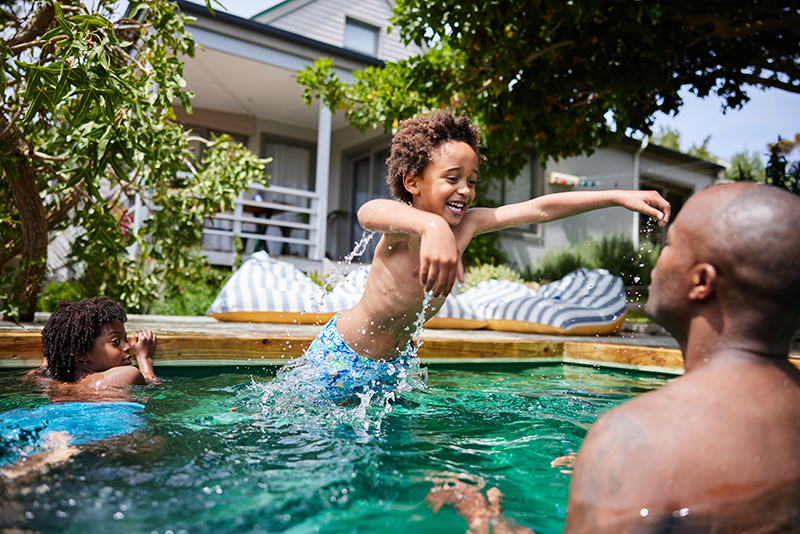
Across Canada, water is part of daily life. It is in our pools, lakes, rivers, beaches, harbours, summer camps, recreation programs, and community spaces.
But feeling safe and confident in and around water is not automatic. For some new-to-Canada participants, an aquatic program may be their first opportunity to learn swimming skills, build water safety knowledge, or develop confidence in pools, lakes, rivers, and oceans.
That first experience matters. It can support safety, open the door to recreation and sport, and help participants and families feel more connected to their community. It can also be shaped by very practical questions: How do I register? What do I wear? What should I bring? How much does it cost? Will the instructions be clear? Will my family feel welcome?
That is where Aqua Welcome: Empowering Newcomers Through Aquatic Physical Literacy comes in.
This new free resource from Sport for Life helps organizations design aquatic programs that are welcoming, accessible, and responsive to the needs of new-to-Canada participants. It brings together practical strategies, local examples, and Sport for Life’s approaches to physical literacy and Quality Sport to support meaningful participation in, on, and around water.
The initiative began in Greater Victoria through the CO-PLAY Network, but the guide is applicable across Canada. Recreation departments, settlement agencies, aquatic facilities, community organizations, sport clubs, and program leaders can adapt their principles, checklists, and strategies to meet the needs of their own communities.
The partners behind Aqua Welcome share why aquatic access matters to new-to-Canada participants and how organizations can create programs that make people feel included and ready to participate.
Why Aquatic Access Matters
Aquatic participation is about more than learning to swim.
It can support water safety, confidence, physical literacy, community connection, recreation, sport participation, and future employment. It can help families feel more comfortable at a pool, at the beach, on a lake, or near the ocean. It can also create a pathway into activities such as swimming, rowing, paddling, sailing, diving, water polo, and outdoor recreation.
Access does not happen just because a program exists.
A welcoming aquatic program starts before someone enters the water. It starts with clear information, trusted partnerships, and staff and volunteers who understand that every participant brings different experiences, comfort levels, cultural backgrounds, and needs.
What’s Inside Aqua Welcome
Aqua Welcome gives organizations a practical starting point for improving aquatic access for new-to-Canada participants.
The guide focuses on three key areas.
Foundations for Welcoming Aquatic Participation
The resource explains how physical literacy and Quality Sport apply in aquatic environments.
In water, physical literacy includes more than swimming technique. It includes confidence, motivation, water-safety knowledge, movement skills, and the ability to participate in various aquatic environments, from pools to lakes, rivers, and oceans.
The guide also includes a ready-to-use checklist for aquatic programs. The checklist helps organizations assess whether their programs are fun, fair, welcoming, developmentally appropriate, culturally responsive, clearly communicated, and designed with lifelong participation in mind.
Six Barriers and Practical Ways to Address Them
Aqua Welcome identifies six barriers that can prevent new-to-Canada participants from taking part in aquatic programs.
- Money: reducing financial barriers through subsidies, grants, low-cost programming, and partnerships.
- Discrimination: creating spaces where participants feel respected and welcome.
- Time: offering flexible schedules that work for families balancing work, school, settlement appointments, and other responsibilities.
- Culture: recognizing that people may have different relationships with water, swimwear, gendered spaces, and family participation.
- Information access: using plain language, visuals, translated materials, and clear instructions about what to bring, what to wear, pool rules, and safety expectations.
- Communication: using simple language, interpretation when possible, and regular check-ins with participants and families.
Each section includes practical actions organizations can take and examples of programs already doing this work.
Local Examples That Communities Across Canada Can Adapt
The guide includes examples from Greater Victoria, including government, non-profit, and private aquatic programs that support or may be relevant to new-to-Canada participants.
These examples are local, but the resource is not limited to one region. Aqua Welcome was developed through a Greater Victoria initiative and designed so communities across Canada can adapt the approach to their own aquatic programs, partnerships, facilities, and participant needs.
Examples include community access swimming lessons, free drop-in rowing sessions for people new to Canada and refugees, nature-based programming, water safety initiatives, aquatic clubs, and funding supports that help reduce cost barriers.
Every community has different resources, but the approach can be adapted anywhere.
From Water Skills to Meaningful Careers
Aquatic skills can also open doors to meaningful careers.
For some participants, the journey may begin with feeling comfortable in water for the first time. Over time, that confidence can lead to lifeguarding, swim instruction, coaching, program leadership, search and rescue, marine work, environmental conservation, facility management, and other careers connected to water.
By supporting new-to-Canada participants in aquatic programs, organizations help people stay safe and foster community. They are helping build confidence, a sense of belonging, leadership, and future pathways.
Who Should Use This Resource?
Aqua Welcome is designed for any organization working to make aquatic participation more welcoming and accessible, including municipal recreation departments, aquatic centres, settlement agencies, community organizations, summer camps, schools, sport clubs, coaches, instructors, lifeguards, program leaders, and anyone supporting new-to-Canada participants.
Whether you are building a new program or improving an existing one, the guide offers practical steps to get started.
Co-Created with Community Partners
Aqua Welcome was co-created through the Greater Victoria hub of the CO-PLAY Network, with contributions from the Inter-Cultural Association of Greater Victoria, the City of Victoria Parks and Recreation Department, the University of Victoria School of Exercise Science, Physical & Health Education, West Shore Parks and Recreation, the Vancouver Island Hispanic Network Society, KidSport Canada, Esquimalt Parks and Recreation, and Saanich Parks, Recreation, and Community Services.
The resource was funded by the Victoria Foundation.
Download the Free Guide
Download Aqua Welcome and explore practical strategies to make aquatic programming more welcoming for new-to-Canada participants in your community.
Learn More
Sport for Life offers related training on Campus:
- Live workshop: Engaging Those Who Are New to Canada via Physical Literacy and Quality Sport
- On-demand learning: Welcome to Canada: Engaging New to Canada Participants in Sport and Physical Activity
Related resources: